Diet
Alcohol and Weight Loss: More Than Just the Calories
Discover how alcohol impacts weight loss beyond calories, affecting metabolism, appetite, and decision-making. Learn strategies for mindful consumption.
Aug 7, 2026
DIRECT ANSWER
An online consultation lets an EU-licensed doctor review your case and, if appropriate, issue a prescription that is valid across the EU.
Less than 4 hours on average
Prescription issued in less than 4 hours on average if approved.
EU-licensed doctors
Every case is reviewed by a licensed clinician.
Valid across the EU
Approved prescriptions can be used at any EU pharmacy.
In this article
HOW IT WORKS
From consultation to collection
- 1
Step 1
Consultation
Answer a secure medical questionnaire online.
- 2
Step 2
Doctor reviews
An EU-licensed doctor personally assesses your case.
- 3
Step 3
Prescription in less than 4 hours on average
If approved, your prescription is issued in less than 4 hours on average.
- 4
Step 4
Collect at any EU pharmacy
Use an approved prescription at a pharmacy anywhere in the EU.
### Key Takeaways Alcohol contains 'empty' calories that contribute to your daily intake without providing significant nutritional value. Beyond calories, alcohol can disrupt metabolism, increase appetite, and impair judgment, making healthy food choices more challenging. Even moderate alcohol consumption can slow down fat burning and affect hormone balance related to weight. Mindful drinking strategies, such as setting limits and choosing lower-calorie options, can help manage its impact on weight loss. * Prioritizing hydration and planning your consumption can support your weight management goals.
A licensed doctor reviews your questionnaire and decides if treatment is appropriate for you.
Start consultationWhen you're on a weight loss journey, every choice you make about what you consume can feel significant. One area that often raises questions is the role of alcohol. While it's common knowledge that alcoholic beverages contain calories, the impact of alcohol on weight management extends far beyond simple caloric intake. Understanding these broader effects can empower you to make more informed decisions that align with your health goals.
The Caloric Reality of Alcohol
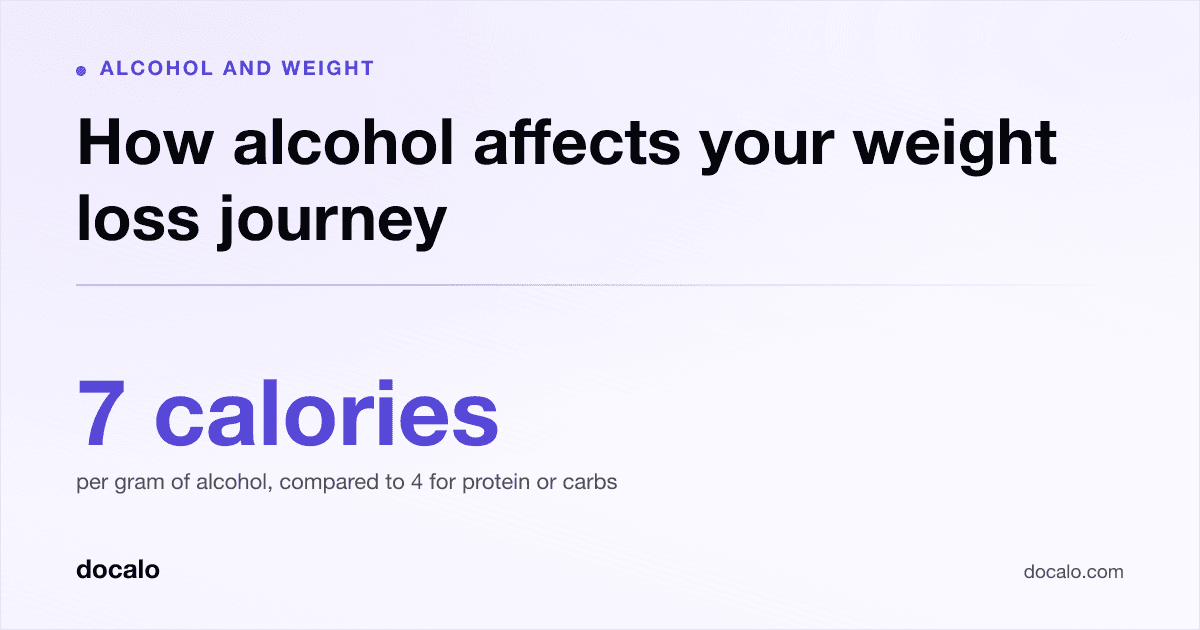
It's true that alcohol is calorie-dense. A gram of alcohol contains approximately 7 calories, which is almost as much as a gram of fat (9 calories) and significantly more than a gram of protein or carbohydrates (both around 4 calories). These are often referred to as 'empty calories' because they provide energy without offering substantial nutritional benefits like vitamins, minerals, or fiber.
Different types of alcoholic drinks vary in their calorie content. For example, a standard glass of wine, a pint of beer, or a shot of spirits can range from about 100 to over 200 calories, depending on the strength and added ingredients. Mixed drinks, especially those with sugary sodas, juices, or syrups, can quickly accumulate even more calories.
If you're aiming for a specific daily calorie deficit to lose weight, these extra calories from alcohol can quickly add up, potentially hindering your progress without you even realizing it. For instance, just a couple of drinks a few times a week could add hundreds of extra calories to your diet, making it harder to maintain the necessary deficit.
Beyond Calories: How Alcohol Affects Your Body and Weight Loss
The impact of alcohol on weight loss is multifaceted, involving metabolic processes, hormonal changes, and behavioral effects. It's not just about the calories in the drink itself; it's also about how your body processes those calories and how alcohol influences your overall eating habits.
Metabolism and Fat Burning
When you consume alcohol, your body prioritizes processing it over other nutrients. Your liver, which plays a crucial role in metabolism, views alcohol as a toxin and works to metabolize it first. This means that while your body is busy breaking down alcohol, the metabolism of fats and carbohydrates can be temporarily suppressed. In essence, your body's ability to burn fat for energy is put on hold until the alcohol has been processed.
This shift in metabolic priority can lead to increased fat storage. If you consume food alongside alcohol, your body is more likely to store the calories from that food as fat, rather than burning them for immediate energy, because it's focused on eliminating the alcohol from your system.
Appetite and Cravings
Alcohol can also stimulate your appetite. Many people find that after a few drinks, they feel hungrier and crave certain foods, often those high in fat, salt, or sugar. This isn't just a psychological effect; alcohol can influence hormones that regulate hunger and satiety. For example, studies suggest alcohol can increase levels of ghrelin, a hormone that stimulates appetite, while potentially decreasing leptin, a hormone that signals fullness.
This increased appetite, combined with impaired judgment (discussed next), can lead to overeating and making less healthy food choices, further contributing to caloric surplus and hindering weight loss efforts.
Impaired Judgment and Decision-Making
One of the most significant behavioral impacts of alcohol on weight loss is its effect on judgment and self-control. Even moderate amounts of alcohol can lower inhibitions and impair your ability to make rational decisions. This can manifest in several ways related to diet and exercise:
- Poor food choices: You might be more likely to snack on unhealthy foods, order calorie-dense takeaways, or simply eat more than you intended when under the influence.
- Skipping workouts: The morning after drinking, you might feel less motivated or too tired to stick to your exercise routine.
- Forgetting your goals: Your long-term weight loss goals might seem less important in the moment, leading to impulsive decisions that go against your plan.
Sleep Quality
While alcohol might initially make you feel drowsy, it can significantly disrupt sleep quality. Drinking before bed can lead to fragmented sleep, frequent awakenings, and reduced time spent in restorative sleep stages. Poor sleep, in turn, is linked to weight gain. It can disrupt hormones that control appetite (increasing ghrelin and decreasing leptin), increase cravings for high-calorie foods, and reduce energy levels for physical activity.
Strategies for Mindful Alcohol Consumption
If you choose to consume alcohol while on a weight loss journey, adopting a mindful approach can help you manage its impact. The goal isn't necessarily complete abstinence for everyone, but rather making informed choices that support your overall health and weight management goals.
- Set Limits: Decide beforehand how many drinks you will have and stick to it. Consider alternating alcoholic drinks with water or sugar-free beverages to slow down your consumption and stay hydrated.
- Choose Wisely: Opt for lower-calorie alcoholic beverages. Dry wines, light beers, and spirits mixed with soda water or diet mixers are generally better choices than sugary cocktails, creamy liqueurs, or regular beer.
- Eat Before You Drink: Don't drink on an empty stomach. Having a balanced meal before consuming alcohol can slow its absorption and help you feel fuller, potentially reducing the urge to overeat later.
- Stay Hydrated: Drink plenty of water throughout the day, and especially when consuming alcohol. This can help you feel full, reduce the number of alcoholic drinks you consume, and mitigate dehydration.
- Be Aware of Portions: Pay attention to serving sizes. A standard pour in a restaurant or bar might be larger than you think, especially for wine or spirits.
- Plan Ahead: If you know you'll be drinking, adjust your calorie intake for the day to accommodate the extra calories from alcohol. Also, plan for healthy food options to be readily available to avoid impulsive unhealthy choices.
- Prioritize Your Goals: Remind yourself of your weight loss goals and how alcohol consumption fits into that. It's about finding a balance that works for you without derailing your progress.
How Docalo can help
Navigating the complexities of weight management requires a holistic approach. Docalo offers a comprehensive program designed to support you on your journey. For EUR49/month, a Docalo membership provides access to licensed doctors who can assess your individual health needs and determine if medical treatment is appropriate for you. This membership includes ongoing clinician review, secure messaging with your care team, progress tracking tools, refill support, and pharmacy coordination. If a doctor decides that treatment is not appropriate, you will receive a full refund. The cost of any prescribed medication, if deemed appropriate, is paid separately at the pharmacy.
A licensed doctor reviews every consultation and decides if treatment is appropriate for your individual situation — nothing is ever prescribed automatically.
Docalo membership is EUR49/month with ongoing medical review. If the doctor decides treatment is not appropriate, you receive a full refund.
Consult DocaloCOMMON QUESTIONS
Frequently asked questions
Yes, when you consume alcohol, your body prioritizes metabolizing it over burning fat. This means your body's ability to use fat for energy is temporarily reduced until the alcohol is processed.