Diet
Ultra-Processed Food: Why It Drives Overeating
Discover why ultra-processed foods are hard to stop eating. Learn about hyper-palatability and how to reduce UPF intake.
Aug 7, 2026
DIRECT ANSWER
An online consultation lets an EU-licensed doctor review your case and, if appropriate, issue a prescription that is valid across the EU.
Less than 4 hours on average
Prescription issued in less than 4 hours on average if approved.
EU-licensed doctors
Every case is reviewed by a licensed clinician.
Valid across the EU
Approved prescriptions can be used at any EU pharmacy.
In this article
HOW IT WORKS
From consultation to collection
- 1
Step 1
Consultation
Answer a secure medical questionnaire online.
- 2
Step 2
Doctor reviews
An EU-licensed doctor personally assesses your case.
- 3
Step 3
Prescription in less than 4 hours on average
If approved, your prescription is issued in less than 4 hours on average.
- 4
Step 4
Collect at any EU pharmacy
Use an approved prescription at a pharmacy anywhere in the EU.
### Key Takeaways Ultra-processed foods (UPFs) are industrial formulations made from ingredients derived from foods, often with additives, and are designed for convenience and palatability. They contribute to overeating due to their high palatability, rapid digestion, and impact on satiety signals. Common characteristics include high sugar, unhealthy fats, salt, and artificial additives, along with a lack of fiber and essential nutrients. Reducing UPF intake can support better health outcomes, including weight management and reduced risk of chronic diseases. * Docalo offers support through a monthly membership, connecting you with a licensed doctor to discuss your health goals and explore suitable treatment options, if appropriate.
A licensed doctor reviews your questionnaire and decides if treatment is appropriate for you.
Start consultationHave you ever found yourself unable to stop eating a bag of crisps or a packet of biscuits, even when you know you're full? You're not alone. The phenomenon of ultra-processed food (UPF) driving overeating is a significant public health concern. These foods are engineered to be incredibly appealing, convenient, and, unfortunately, often difficult to eat in moderation. Understanding why they have this effect can be the first step towards making more conscious dietary choices.
What Exactly Are Ultra-Processed Foods?
Ultra-processed foods are industrial formulations typically made from five or more ingredients, often including substances not commonly used in home cooking, such as high-fructose corn syrup, hydrogenated oils, protein isolates, and various additives like emulsifiers, thickeners, and artificial flavors and colors. They undergo multiple industrial processes and are designed to be ready-to-eat or ready-to-heat, durable, and highly palatable.
Think of items like:
- Packaged snacks (crisps, cookies, cakes)
- Sugary drinks
- Breakfast cereals (many types)
- Reconstituted meat products (sausages, nuggets)
- Instant noodles and ready meals
- Sweetened yogurts and dairy desserts
These differ significantly from 'processed foods' like bread, cheese, or canned vegetables, which undergo some processing but retain much of their original food structure and nutritional value.
The Science Behind Overeating UPFs
Several factors contribute to why ultra-processed foods are so difficult to stop eating once you start:
1. Hyper-Palatability: The Bliss Point
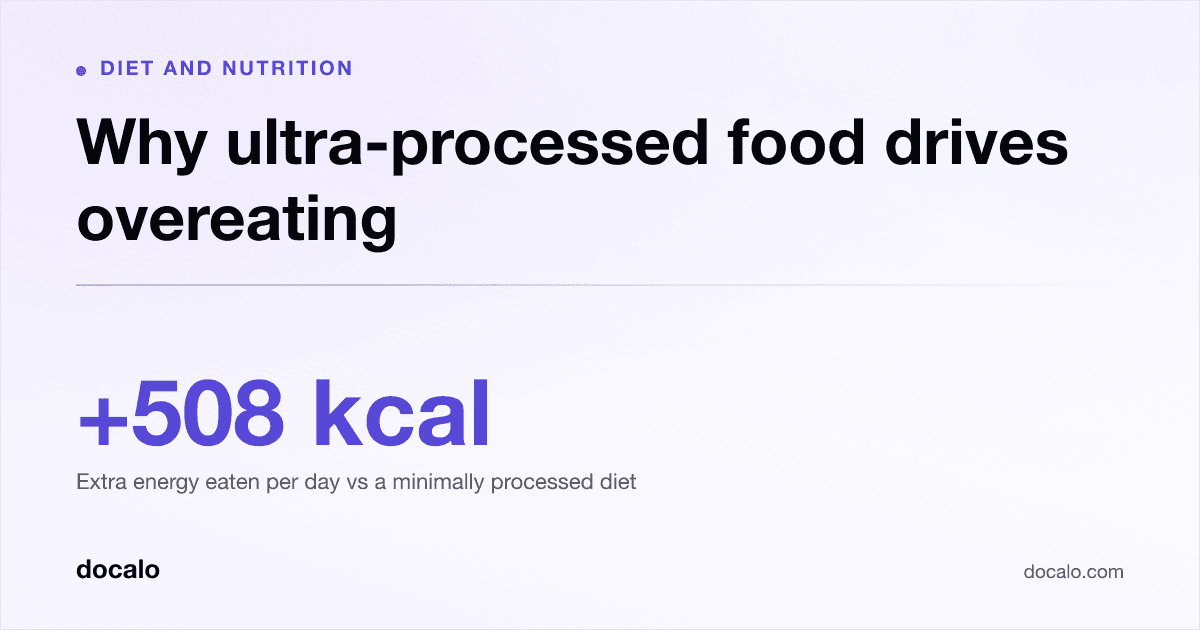
UPFs are meticulously engineered to hit a 'bliss point' – an optimal combination of sugar, fat, and salt that makes them incredibly appealing to our taste buds. This combination triggers a strong reward response in the brain, similar to how addictive substances work. Our brains are wired to seek out calorie-dense foods, a survival mechanism from times of scarcity. UPFs exploit this by delivering a concentrated burst of energy and pleasure, overriding natural satiety signals.
2. Rapid Digestion and Absorption
Due to their refined nature and lack of fiber, UPFs are often digested and absorbed very quickly. This leads to rapid spikes in blood sugar and insulin, followed by a subsequent crash. This roller-coaster effect can leave you feeling hungry again soon after eating, even if you consumed a large number of calories.
3. Lack of Satiety and Nutrient Density
Many UPFs are low in fiber, protein, and essential micronutrients – components that are crucial for promoting feelings of fullness and satisfaction. Fiber adds bulk and slows digestion, while protein is known for its satiating properties. When foods lack these elements, you can consume a large volume of calories without feeling truly satisfied, leading to continued eating.
4. Texture and Mouthfeel
The texture of UPFs is also carefully designed. They are often soft, crunchy, or melt-in-your-mouth, requiring less chewing and making them easier to consume quickly. This can bypass the signals our body sends to the brain about how much we've eaten, contributing to overconsumption.
5. Additives and Their Potential Effects
While research is ongoing, some studies suggest that certain food additives commonly found in UPFs, such as emulsifiers, might negatively impact gut microbiota. A healthy gut microbiome plays a role in regulating appetite and metabolism. Disruptions to this balance could potentially influence hunger and satiety signals.
6. Marketing and Accessibility
Beyond their intrinsic properties, UPFs are heavily marketed and widely available, often at lower prices than whole, unprocessed foods. Their convenience and long shelf life make them an easy choice in busy lifestyles, further contributing to their consumption.
The Health Implications of a UPF-Rich Diet
Regular consumption of ultra-processed foods is linked to a range of negative health outcomes, including:
- Weight gain and obesity: As discussed, their tendency to promote overeating is a primary driver.
- Increased risk of type 2 diabetes: Due to high sugar content and rapid blood sugar spikes.
- Cardiovascular diseases: Often high in unhealthy fats, sodium, and sugar.
- Certain cancers: Some studies suggest a link, though more research is needed.
- Mental health issues: Emerging research indicates a potential association with depression and anxiety.
- Gut health problems: Potential negative impact on the gut microbiome.
Strategies for Reducing UPF Intake
While completely eliminating UPFs might be challenging for many, reducing their consumption can significantly benefit your health. Here are some practical strategies:
- Prioritize Whole Foods: Focus on building your meals around whole, unprocessed ingredients like fruits, vegetables, lean proteins, whole grains, and legumes.
- Read Food Labels: Become familiar with ingredient lists. If a product contains many ingredients you don't recognize or wouldn't use in home cooking, it's likely ultra-processed.
- Cook More at Home: Preparing meals from scratch gives you control over the ingredients and helps you avoid hidden sugars, unhealthy fats, and additives.
- Plan Your Meals and Snacks: Having healthy options readily available can prevent you from reaching for convenient UPFs when hunger strikes.
- Be Mindful of Beverages: Sugary drinks are a major source of UPF calories. Opt for water, unsweetened tea, or coffee instead.
- Shop the Perimeter of the Supermarket: This is often where fresh produce, meats, and dairy are located, while the inner aisles tend to house more processed items.
- Identify Your Triggers: Pay attention to when and why you tend to consume UPFs. Is it stress, boredom, or convenience? Addressing these triggers can help.
Making gradual changes can be more sustainable than attempting an overnight overhaul. Every small step towards reducing UPF intake is a step towards better health.
How Docalo can help
Navigating dietary changes and understanding the impact of food on your health can be complex. Docalo offers a supportive approach to help you on your health journey. For EUR49/month, a Docalo membership provides access to a licensed doctor who can review your health profile and discuss your goals. If the doctor determines that treatment is appropriate for your specific needs, they will develop a personalized plan. Your membership includes ongoing care-team messaging, progress tracking, refill support, and pharmacy coordination. Please note that medication, if prescribed, is paid separately at the pharmacy. If, after your consultation, the doctor decides that treatment is not appropriate, you will receive a full refund.
A licensed doctor reviews every consultation and decides if treatment is appropriate for your individual situation — nothing is ever prescribed automatically.
Docalo membership is EUR49/month with ongoing medical review. If the doctor decides treatment is not appropriate, you receive a full refund.
Consult DocaloCOMMON QUESTIONS
Frequently asked questions
Processed foods undergo some alteration for safety or convenience (e.g., canned vegetables, cheese, bread). Ultra-processed foods are industrial formulations made from many ingredients, often including substances not typically used in home cooking, and are designed to be highly palatable and convenient (e.g., sugary drinks, packaged snacks, instant noodles).