Weight loss
Hypothyroidism and Weight: How Much It Really Explains
Explore the complex relationship between an underactive thyroid (hypothyroidism) and weight changes. However, it does not guarantee significant weight loss.
Aug 7, 2026
DIRECT ANSWER
An online consultation lets an EU-licensed doctor review your case and, if appropriate, issue a prescription that is valid across the EU.
Less than 4 hours on average
Prescription issued in less than 4 hours on average if approved.
EU-licensed doctors
Every case is reviewed by a licensed clinician.
Valid across the EU
Approved prescriptions can be used at any EU pharmacy.
In this article
HOW IT WORKS
From consultation to collection
- 1
Step 1
Consultation
Answer a secure medical questionnaire online.
- 2
Step 2
Doctor reviews
An EU-licensed doctor personally assesses your case.
- 3
Step 3
Prescription in less than 4 hours on average
If approved, your prescription is issued in less than 4 hours on average.
- 4
Step 4
Collect at any EU pharmacy
Use an approved prescription at a pharmacy anywhere in the EU.
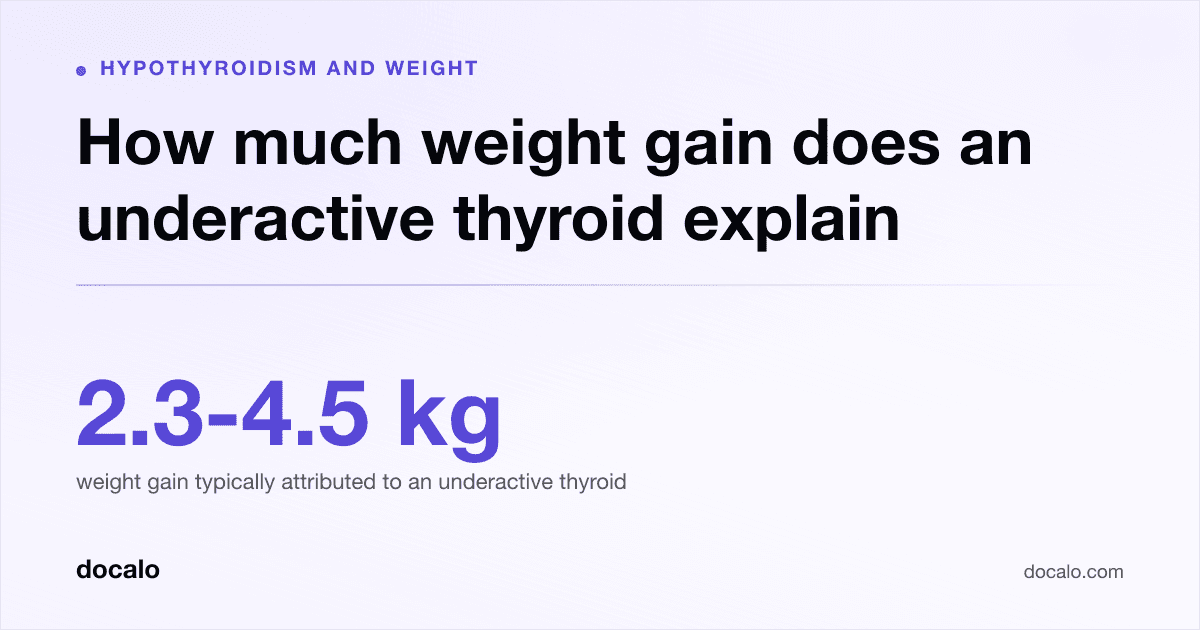
Key Takeaways: Hypothyroidism can cause weight gain due to a slowed metabolism and fluid retention. The amount of weight gained directly attributable to hypothyroidism is often modest, typically 2.3-4.5 kilograms. Effective treatment for hypothyroidism can help normalize metabolism and support weight management efforts. Lifestyle factors like diet and exercise remain crucial for weight management, even with thyroid treatment. * If you suspect you have hypothyroidism, consult a doctor for proper diagnosis and treatment.
A licensed doctor reviews your questionnaire and decides if treatment is appropriate for you.
Start consultationThe Thyroid Gland and Its Role in Metabolism
The thyroid gland, a small, butterfly-shaped organ located at the base of your neck, plays a pivotal role in regulating your body's metabolism. It produces hormones, primarily thyroxine (T4) and triiodothyronine (T3), which influence nearly every cell in your body. These hormones dictate how your body uses energy, affecting processes like heart rate, body temperature, and how quickly you burn calories.
When your thyroid gland doesn't produce enough of these vital hormones, a condition known as hypothyroidism or an underactive thyroid develops. This slowdown in hormone production can have a cascading effect on your body's functions, including your metabolism, which can lead to various symptoms, one of the most commonly discussed being weight gain.
How Hypothyroidism Can Lead to Weight Gain
Hypothyroidism and weight gain are often linked because of the thyroid's central role in metabolic regulation. When thyroid hormone levels are low, your body's metabolic rate slows down. This means your body burns fewer calories at rest, making it easier to gain weight even if your dietary habits haven't changed significantly.
Beyond a slower metabolism, other factors contribute to weight gain in individuals with hypothyroidism:
- Fluid Retention: Low thyroid hormone levels can cause the body to retain excess salt and water. This fluid retention can contribute to an increase in body weight, often giving a puffy appearance.
- Fatigue and Reduced Activity: Hypothyroidism often causes profound fatigue, muscle weakness, and joint pain. These symptoms can make it difficult to engage in regular physical activity, further contributing to weight gain and making weight management efforts more challenging.
- Changes in Appetite: While less direct, some individuals with hypothyroidism may experience changes in appetite or cravings that can impact their caloric intake.
It's important to understand that the weight gain directly attributable to hypothyroidism is typically modest. Studies and clinical observations suggest that most of the weight gained due to an underactive thyroid is usually in the range of 2.3 to 4.5 kilograms. A significant portion of this initial weight gain is often due to fluid retention rather than an increase in body fat.
Diagnosing Hypothyroidism
Diagnosing hypothyroidism usually involves a simple blood test to measure the levels of Thyroid Stimulating Hormone (TSH) and, sometimes, thyroid hormones (T4 and T3). A high TSH level indicates that the pituitary gland is working harder to stimulate a sluggish thyroid, suggesting an underactive thyroid.
Symptoms of hypothyroidism can be vague and overlap with other conditions, making diagnosis challenging without proper testing. Common symptoms include:
- Fatigue
- Weight gain or difficulty managing weight
- Constipation
- Dry skin
- Hair loss
- Feeling cold
- Muscle weakness and aches
- Depression
- Heavy or irregular menstrual periods
If you experience several of these symptoms, especially persistent fatigue and unexplained weight changes, it's advisable to consult a doctor.
Managing Weight with Hypothyroidism Treatment
The primary treatment for hypothyroidism involves taking a synthetic thyroid hormone replacement medication daily. This medication works to restore your thyroid hormone levels to a normal range, thereby alleviating symptoms and normalizing your metabolism.
Once thyroid hormone levels are optimized with treatment, many individuals find that their metabolism returns to normal, and some of the weight gained due to fluid retention may be lost. However, it's crucial to have realistic expectations:
- Weight management support: While treatment can make weight management easier, it does not automatically lead to significant weight loss. For many, it simply levels the playing field, making it possible to manage weight through traditional methods.
- Focus on lifestyle: Even with optimal thyroid hormone levels, diet and exercise remain fundamental to weight management. A balanced diet rich in whole foods and regular physical activity are essential components of a healthy lifestyle.
- Patience is key: It can take time for thyroid hormone levels to stabilize and for your body to adjust. Consistent medication adherence and regular follow-ups with your doctor are important.
If you are receiving treatment for hypothyroidism and are still struggling with weight, discuss this with your doctor. They can assess if your thyroid hormone levels are adequately controlled and help you explore other potential contributing factors to weight gain.
Beyond Thyroid Hormones: Other Factors in Weight Management
It's important to remember that weight management is complex and rarely attributable to a single cause. Even if you have hypothyroidism, other factors significantly influence your weight:
- Dietary Habits: The types and quantities of food you consume play a major role. Consuming too many calories, especially from processed foods, sugary drinks, and unhealthy fats, can lead to weight gain regardless of thyroid function.
- Physical Activity: Regular exercise burns calories, builds muscle mass (which boosts metabolism), and improves overall health. A sedentary lifestyle contributes to weight gain.
- Sleep Quality: Insufficient or poor-quality sleep can disrupt hormones that regulate appetite and metabolism, potentially leading to increased hunger and weight gain.
- Stress Levels: Chronic stress can lead to elevated cortisol levels, a hormone that can promote fat storage, particularly around the abdomen.
- Other Medical Conditions and Medications: Certain other health conditions (e.g., Polycystic Ovary Syndrome, insulin resistance) and medications (e.g., some antidepressants, corticosteroids) can also contribute to weight gain.
Addressing these lifestyle factors alongside your thyroid treatment can significantly support your chances of successful weight management.
How Docalo can help
Docalo offers a comprehensive approach to health and well-being. If you are concerned about your weight or suspect you might have an underlying condition like hypothyroidism, Docalo can connect you with licensed doctors who can provide guidance. Through our platform, you can have a confidential consultation to discuss your symptoms, medical history, and concerns. A licensed doctor will assess your situation and decide if further investigation, such as blood tests, or a specific treatment plan is appropriate for you. If treatment is deemed suitable, our care team can support you with progress tracking, refill assistance, and pharmacy coordination. Our monthly membership is EUR49, covering clinician review, care-team messaging, and ongoing support. Please note that any prescribed medication, if deemed appropriate by the doctor, is paid separately at the pharmacy. If, after a consultation, the doctor decides that treatment is not appropriate for your specific needs, you will receive a full refund.
Docalo membership is EUR49/month with ongoing medical review. If the doctor decides treatment is not appropriate, you receive a full refund.
Consult DocaloCOMMON QUESTIONS
Frequently asked questions
The weight gain directly attributable to hypothyroidism is typically modest, often around 2.3 to 4.5 kg. A significant portion of this initial weight gain is often due to fluid retention rather than an increase in body fat.