Weight loss
Understanding Medications That Can Lead to Weight Gain
Discover common medications that can lead to weight gain and understand why. Many common medications can contribute to weight gain as a side effect.
Aug 7, 2026
DIRECT ANSWER
An online consultation lets an EU-licensed doctor review your case and, if appropriate, issue a prescription that is valid across the EU.
Less than 4 hours on average
Prescription issued in less than 4 hours on average if approved.
EU-licensed doctors
Every case is reviewed by a licensed clinician.
Valid across the EU
Approved prescriptions can be used at any EU pharmacy.
In this article
HOW IT WORKS
From consultation to collection
- 1
Step 1
Consultation
Answer a secure medical questionnaire online.
- 2
Step 2
Doctor reviews
An EU-licensed doctor personally assesses your case.
- 3
Step 3
Prescription in less than 4 hours on average
If approved, your prescription is issued in less than 4 hours on average.
- 4
Step 4
Collect at any EU pharmacy
Use an approved prescription at a pharmacy anywhere in the EU.
### Key Takeaways Many common medications, including those for diabetes, depression, high blood pressure, and allergies, can cause weight gain as a side effect. Weight gain from medication can be due to increased appetite, fluid retention, changes in metabolism, or impacts on fat storage. It's crucial to discuss any concerns about medication-related weight changes with your doctor; never stop or adjust medication without professional guidance. Your doctor may be able to suggest alternative medications, dosage adjustments, or strategies to manage weight while continuing essential treatment. * Docalo offers a membership that includes clinician review, care-team messaging, and progress tracking to support you in managing your health, including discussions about medication side effects.
A licensed doctor reviews your questionnaire and decides if treatment is appropriate for you.
Start consultationIt's a common and often frustrating experience: you're taking a medication prescribed to improve your health, but you notice the numbers on the scale creeping up. This phenomenon, known as medication-induced weight gain, is a recognized side effect of many widely used drugs. While the primary goal of any medication is to treat a specific condition, understanding its potential impact on your weight is an important part of managing your overall health.
This article will explore various types of medications that can contribute to weight gain, explain why this happens, and, most importantly, guide you on how to discuss these concerns with your healthcare provider. It's vital to remember that you should never stop or change your medication without consulting your doctor, as this could have serious health consequences.
Why Do Some Medications Cause Weight Gain?
The mechanisms behind medication-induced weight gain are varied and can be complex. Here are some of the common ways certain drugs can affect your body and lead to an increase in weight:
1. Increased Appetite
Some medications can directly stimulate your appetite, making you feel hungrier more often or increasing your cravings for certain types of food, particularly those high in calories. This can lead to consuming more food than your body needs, resulting in weight gain over time.
2. Changes in Metabolism
Certain drugs can alter your body's metabolism, the process by which your body converts food and drinks into energy. A slower metabolism means your body burns fewer calories at rest, making it easier to store excess energy as fat.
3. Fluid Retention
Some medications can cause your body to retain more fluid, leading to an increase in weight that is not necessarily fat. While this might not be fat gain, it still registers as weight gain on the scale and can contribute to feelings of bloating and discomfort.
4. Sedation or Fatigue
Medications that cause drowsiness or fatigue can reduce your physical activity levels. If you're less active, you burn fewer calories, and this decrease in energy expenditure, combined with unchanged or increased calorie intake, can lead to weight gain.
5. Impact on Fat Storage
Some medications can directly influence how your body stores fat, promoting the accumulation of fat cells or changing their distribution.
Common Types of Medications Linked to Weight Gain
Many different classes of medications have been associated with weight gain. It's important to note that not everyone taking these medications will experience weight gain, and the extent of weight gain can vary significantly from person to person.
1. Antidiabetic Medications
While some medications for managing blood sugar levels can lead to weight loss, others are known to cause weight gain. This can be particularly challenging for individuals already managing conditions where weight is a factor.
2. Antidepressants
Several types of antidepressants, particularly older generations and some newer ones, can lead to weight gain. This is often attributed to changes in metabolism, increased appetite, and sometimes sedation. Managing mental health is crucial, so discussing these side effects with your doctor is key to finding the right balance.
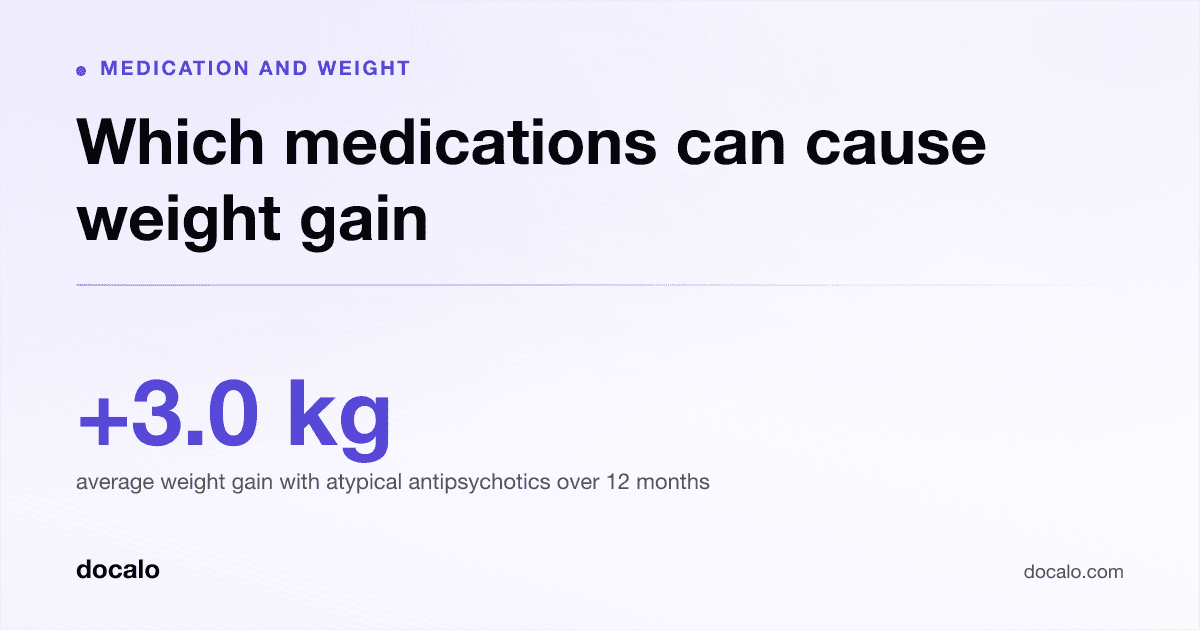
3. Antipsychotics
These medications, used to treat conditions like schizophrenia and bipolar disorder, are well-known for their potential to cause significant weight gain. The mechanisms are complex and can involve metabolic changes, increased appetite, and hormonal effects.
4. Corticosteroids
Often prescribed for inflammatory conditions like asthma, arthritis, and autoimmune diseases, corticosteroids can cause increased appetite, fluid retention, and changes in fat distribution, leading to weight gain, especially with long-term use.
5. Antihistamines
Some older antihistamines, commonly used for allergies, can cause increased appetite and sedation, potentially contributing to weight gain.
6. Beta-Blockers
Used for high blood pressure, heart conditions, and anxiety, some beta-blockers can slow metabolism and cause fatigue, leading to reduced physical activity and potential weight gain.
7. Certain Migraine Medications
Some medications used for migraine prevention can have weight gain as a side effect, though this is not universal across all migraine treatments.
8. Hormonal Therapies
Some hormonal treatments, including certain contraceptives or hormone replacement therapies, can sometimes lead to weight changes, often due to fluid retention or appetite changes.
What to Ask Your Doctor
If you are concerned about weight gain while taking a medication, the most important step is to speak with your doctor. They are the best resource to help you understand your options and make informed decisions about your health. Here are some questions you might consider asking:
- "Could my current medication be contributing to my weight gain?"
- This direct question opens the conversation and allows your doctor to assess if there's a link between your medication and your weight changes.
- "Are there alternative medications for my condition that are less likely to cause weight gain?"
- Your doctor may be aware of other treatment options that could be more suitable for you, considering your weight concerns.
- "What strategies can I use to manage my weight while continuing this medication?"
- Even if changing medication isn't an option, your doctor or a healthcare professional can offer advice on diet, exercise, and lifestyle adjustments to help mitigate weight gain.
- "Are there any dosage adjustments that could help reduce this side effect?"
- Sometimes, a lower dose might still be effective for your condition while reducing side effects, but this must always be decided by your doctor.
- "Could this weight gain be due to something else?"
- It's important to rule out other potential causes for weight gain, such as underlying medical conditions or lifestyle factors, which your doctor can help investigate.
- "What are the potential risks if I were to stop or change this medication on my own?"
- This question reinforces your understanding of the importance of medical supervision and helps you grasp the potential consequences of unsupervised changes.
Remember to be open and honest with your doctor about your concerns and any lifestyle changes you've made. They need a complete picture to provide the best advice.
How Docalo can help
Managing your health, especially when dealing with medication side effects like weight gain, can feel overwhelming. Docalo offers a supportive approach to help you navigate these challenges.
For EUR49/month, a Docalo membership provides access to a comprehensive care program. This includes a clinician review to assess your individual health needs and determine if treatment is appropriate for you. If the doctor decides treatment is not suitable, you will receive a full refund. Our membership also includes ongoing care-team messaging, allowing you to communicate with healthcare professionals about your progress and concerns, such as medication side effects. You'll also benefit from progress tracking tools to monitor your health journey and refill support to ensure your treatment continuity. Additionally, we provide pharmacy coordination to streamline the process of obtaining any prescribed medication (medication costs are paid separately at the pharmacy).
Our goal is to empower you with knowledge and support, helping you work with licensed doctors to make informed decisions about your health and well-being.
A licensed doctor reviews every consultation and decides if treatment is appropriate for your individual situation — nothing is ever prescribed automatically.
Docalo membership is EUR49/month with ongoing medical review. If the doctor decides treatment is not appropriate, you receive a full refund.
Consult DocaloCOMMON QUESTIONS
Frequently asked questions
No, not all medications cause weight gain. However, many common types of drugs, including some for diabetes, depression, high blood pressure, and allergies, have been linked to it. The effect varies greatly among individuals and specific medications.