Weight loss
PCOS and Weight: Understanding the Challenges and Finding Support
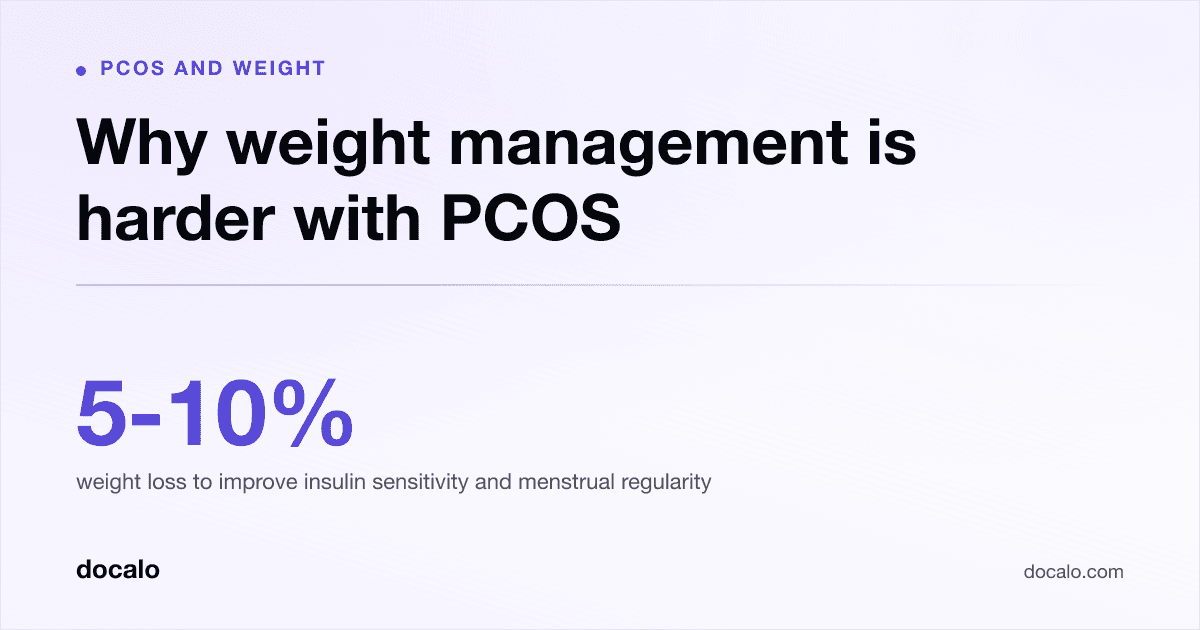
Discover why weight management is harder with PCOS due to hormonal imbalances like insulin resistance. A holistic and sustainable approach is key.
Aug 7, 2026
DIRECT ANSWER
An online consultation lets an EU-licensed doctor review your case and, if appropriate, issue a prescription that is valid across the EU.
Less than 4 hours on average
Prescription issued in less than 4 hours on average if approved.
EU-licensed doctors
Every case is reviewed by a licensed clinician.
Valid across the EU
Approved prescriptions can be used at any EU pharmacy.
In this article
HOW IT WORKS
From consultation to collection
- 1
Step 1
Consultation
Answer a secure medical questionnaire online.
- 2
Step 2
Doctor reviews
An EU-licensed doctor personally assesses your case.
- 3
Step 3
Prescription in less than 4 hours on average
If approved, your prescription is issued in less than 4 hours on average.
- 4
Step 4
Collect at any EU pharmacy
Use an approved prescription at a pharmacy anywhere in the EU.
### Key Takeaways: PCOS and weight gain are often linked due to hormonal imbalances like insulin resistance and elevated androgens. Insulin resistance is a major factor, making it harder for the body to use glucose and store fat more readily. Weight loss can significantly improve PCOS symptoms, including menstrual regularity, fertility, and metabolic health. A holistic approach involving dietary changes, regular physical activity, stress management, and medical guidance is most effective. * Docalo offers support through licensed doctors who can assess your situation and determine if treatment is appropriate, alongside ongoing care and progress tracking.
A licensed doctor reviews your questionnaire and decides if treatment is appropriate for you.
Start consultationPolycystic Ovary Syndrome (PCOS) is a common hormonal disorder affecting many women of reproductive age. While its symptoms can vary widely, one of the most frequently discussed and often frustrating aspects for those with PCOS is weight management. Many individuals with PCOS find it significantly harder to lose weight and easier to gain it compared to those without the condition. This isn't due to a lack of effort but rather a complex interplay of hormonal factors inherent to PCOS.
Understanding these underlying mechanisms is the first step toward developing effective strategies to manage weight and improve overall health when living with PCOS.
Why is Weight Management Harder with PCOS?
The connection between PCOS and weight is intricate, involving several hormonal and metabolic factors. These factors can create a challenging environment for weight loss.
Insulin Resistance
One of the most significant contributors to weight gain and difficulty losing weight in PCOS is insulin resistance. Insulin is a hormone produced by the pancreas that helps your body's cells absorb glucose (sugar) from your bloodstream to use for energy. When you have insulin resistance, your cells don't respond effectively to insulin. As a result, your pancreas produces more insulin to try and get glucose into the cells, leading to elevated insulin levels in your blood.
High insulin levels contribute to weight gain in several ways:
- Increased fat storage: Insulin is a fat-storage hormone. Elevated levels can signal your body to store more fat, particularly around the abdomen.
- Difficulty burning fat: High insulin levels can also inhibit the breakdown of fat for energy, making it harder to lose weight.
- Increased appetite: Some research suggests that insulin resistance might affect appetite regulation, leading to increased cravings, especially for carbohydrates.
Elevated Androgens
PCOS is characterized by higher-than-normal levels of androgens, often called "male hormones," such as testosterone. While women naturally produce androgens, excessive levels can contribute to symptoms like acne, excessive hair growth (hirsutism), and hair thinning. These elevated androgens are also linked to an increased tendency to store fat in the abdominal area, which is metabolically less healthy than fat stored elsewhere.
Chronic Inflammation
Many individuals with PCOS experience chronic low-grade inflammation. While the exact relationship is still being researched, inflammation can contribute to insulin resistance and may also affect metabolism and weight regulation.
Genetic Predisposition
Genetics play a role in PCOS, and a family history of the condition or type 2 diabetes (which is also linked to insulin resistance) can increase an individual's susceptibility to both PCOS and weight challenges.
Other Factors
Other contributing factors can include an altered gut microbiome, sleep disturbances, and stress, all of which can impact metabolism and hormonal balance.
The Vicious Cycle: Weight and PCOS Symptoms
It's important to understand that the relationship between weight and PCOS is often a two-way street. While PCOS can make weight loss difficult, excess weight can also exacerbate PCOS symptoms. This can create a challenging cycle:
- Increased insulin resistance: Higher body weight, particularly abdominal fat, can worsen insulin resistance.
- Worsened hormonal imbalances: Increased fat tissue can produce hormones that further disrupt the delicate balance, potentially leading to more elevated androgens.
- Irregular periods and fertility issues: Weight gain can worsen menstrual irregularities and make conception more difficult for those trying to get pregnant.
- Increased risk of associated conditions: Obesity in PCOS increases the risk of developing type 2 diabetes, heart disease, and sleep apnea.
Breaking this cycle is crucial for managing PCOS symptoms and improving long-term health.
What Helps with Weight Management in PCOS?
While the challenges are real, effective strategies exist to manage weight with PCOS. A holistic and sustainable approach is key.
Dietary Changes
Focusing on nutrition is often one of the most impactful steps. The goal isn't necessarily to follow a restrictive diet, but rather to make sustainable choices that support insulin sensitivity and overall health.
- Prioritize whole, unprocessed foods: Emphasize fruits, vegetables, lean proteins, and healthy fats. These foods are rich in nutrients and fiber, which can help regulate blood sugar levels.
- Choose complex carbohydrates: Opt for whole grains (like oats, brown rice, quinoa) over refined carbohydrates (white bread, sugary cereals). Complex carbs are digested more slowly, preventing rapid spikes in blood sugar and insulin.
- Adequate protein intake: Protein helps with satiety and can support muscle mass, which is metabolically active.
- Healthy fats: Include sources like avocados, nuts, seeds, and olive oil, which are important for hormone production and satiety.
- Limit added sugars and sugary drinks: These can significantly contribute to insulin resistance and weight gain.
Regular Physical Activity
Exercise is vital for improving insulin sensitivity, burning calories, and boosting mood. Aim for a combination of:
- Aerobic exercise: Activities like brisk walking, jogging, swimming, or cycling can improve cardiovascular health and help with calorie expenditure.
- Strength training: Building muscle mass can increase your metabolic rate, meaning your body burns more calories even at rest. It also directly improves insulin sensitivity.
Consistency is more important than intensity. Find activities you enjoy to make it a sustainable part of your routine.
Stress Management
Chronic stress can elevate cortisol levels, a hormone that can contribute to insulin resistance and abdominal fat storage. Incorporating stress-reducing practices can be very beneficial:
- Mindfulness and meditation: Even a few minutes a day can make a difference.
- Yoga or Tai Chi: These practices combine physical movement with relaxation.
- Adequate sleep: Poor sleep can disrupt hormones that regulate appetite and metabolism.
- Hobbies and social connections: Engaging in enjoyable activities can reduce stress.
Medical Support and Guidance
Working with healthcare professionals is crucial for personalized advice and support. A doctor can help diagnose PCOS, rule out other conditions, and discuss various treatment options. This might include:
- Lifestyle modifications: Reinforcing and guiding you on diet and exercise strategies.
- Medication: In some cases, a doctor may discuss medication options to help manage insulin resistance or other PCOS symptoms. A licensed doctor will decide if treatment is appropriate for you.
Patience and Persistence
Weight management with PCOS is often a marathon, not a sprint. There will be good days and challenging days. Celebrate small victories, be kind to yourself, and remember that consistency over time yields the best results. Focus on overall health improvements, not just the number on the scale.
How Docalo can help
Docalo is an EU telehealth service that can support you on your health journey, including managing conditions like PCOS. Our service connects you with licensed doctors who can assess your individual situation, discuss your symptoms, and determine if treatment is appropriate for you. If a doctor decides that treatment is not appropriate, you will receive a full refund for your membership.
With a Docalo membership, priced at EUR49/month, you receive:
- Clinician review: A licensed doctor will review your health profile and symptoms.
- Care-team messaging: Communicate with your care team for ongoing support and questions.
- Progress tracking: Monitor your health improvements and stay motivated.
- Refill support: Assistance with managing your prescriptions, if prescribed.
- Pharmacy coordination: Help in coordinating with your pharmacy for medication delivery or pickup.
Medication, if prescribed, is paid separately at the pharmacy. Our goal is to provide comprehensive, accessible care to help you manage your health effectively and safely.
Docalo membership is EUR49/month with ongoing medical review. If the doctor decides treatment is not appropriate, you receive a full refund.
Consult DocaloCOMMON QUESTIONS
Frequently asked questions
Weight loss with PCOS is often challenging due to hormonal imbalances, primarily insulin resistance and elevated androgens. Insulin resistance makes your body store fat more easily and makes it harder to burn fat for energy. Elevated androgens can also contribute to abdominal fat storage.