Weight loss
Slow Metabolism and Weight: Separating Fact from Fiction
Explore the truth about slow metabolism and its link to weight. Many people wonder if a 'slow metabolism' is the reason they struggle with weight.
Aug 7, 2026
DIRECT ANSWER
An online consultation lets an EU-licensed doctor review your case and, if appropriate, issue a prescription that is valid across the EU.
Less than 4 hours on average
Prescription issued in less than 4 hours on average if approved.
EU-licensed doctors
Every case is reviewed by a licensed clinician.
Valid across the EU
Approved prescriptions can be used at any EU pharmacy.
In this article
HOW IT WORKS
From consultation to collection
- 1
Step 1
Consultation
Answer a secure medical questionnaire online.
- 2
Step 2
Doctor reviews
An EU-licensed doctor personally assesses your case.
- 3
Step 3
Prescription in less than 4 hours on average
If approved, your prescription is issued in less than 4 hours on average.
- 4
Step 4
Collect at any EU pharmacy
Use an approved prescription at a pharmacy anywhere in the EU.
### Key Takeaways Metabolism is complex: It's not just one thing, but a collection of chemical processes that convert food into energy. Genetics play a role: Your genes influence your basal metabolic rate, but lifestyle factors often have a greater impact on weight. Age and muscle mass: Metabolism naturally slows with age, partly due to a decrease in muscle mass. Diet and exercise: These are the most significant modifiable factors affecting your metabolic rate and weight. * Sustainable habits: Focusing on balanced nutrition and regular physical activity is key for long-term weight management, rather than blaming a 'slow metabolism'.
A licensed doctor reviews your questionnaire and decides if treatment is appropriate for you.
Start consultationUnderstanding Metabolism: More Than Just a Number
When people talk about a "slow metabolism and weight," they often imagine a sluggish internal engine that burns fewer calories, leading to weight gain. While it's true that individual metabolic rates vary, the concept is far more nuanced than a simple on/off switch. Metabolism refers to all the chemical processes continuously happening inside your body that keep you alive and functioning. These processes convert the food and drinks you consume into energy. This energy is then used for everything from breathing and circulating blood to repairing cells and thinking.
Your total energy expenditure, or the number of calories your body burns each day, is made up of several components:
- Basal Metabolic Rate (BMR): This is the energy your body uses to maintain basic functions while at rest, such as breathing, circulation, cell production, and temperature regulation. It accounts for the largest portion of your daily calorie burn (60-75%).
- Thermic Effect of Food (TEF): This is the energy required to digest, absorb, and process the nutrients from the food you eat. It accounts for about 10% of your daily calorie burn.
- Activity Energy Expenditure (AEE): This includes the energy used for physical activity, both planned exercise and non-exercise activity thermogenesis (NEAT), like fidgeting, walking, and standing. This component is the most variable and can significantly impact your total calorie burn.
The Genetics of Metabolism: What You Inherit
It's a common belief that some people are simply born with a "fast" metabolism and others with a "slow" one. While genetics do play a role in determining your basal metabolic rate, it's not the sole determinant of your weight. Genetic factors can influence the efficiency of your body's energy use, your body composition (the ratio of fat to muscle), and even your appetite and satiety signals. However, attributing all weight struggles to genetics overlooks the significant impact of lifestyle choices.
Think of genetics as providing a blueprint, but your daily habits and environment ultimately shape the final structure. While you can't change your genes, you can certainly influence how they are expressed through your diet, exercise, and overall lifestyle.
Age, Muscle, and Metabolic Rate: The Natural Slowdown
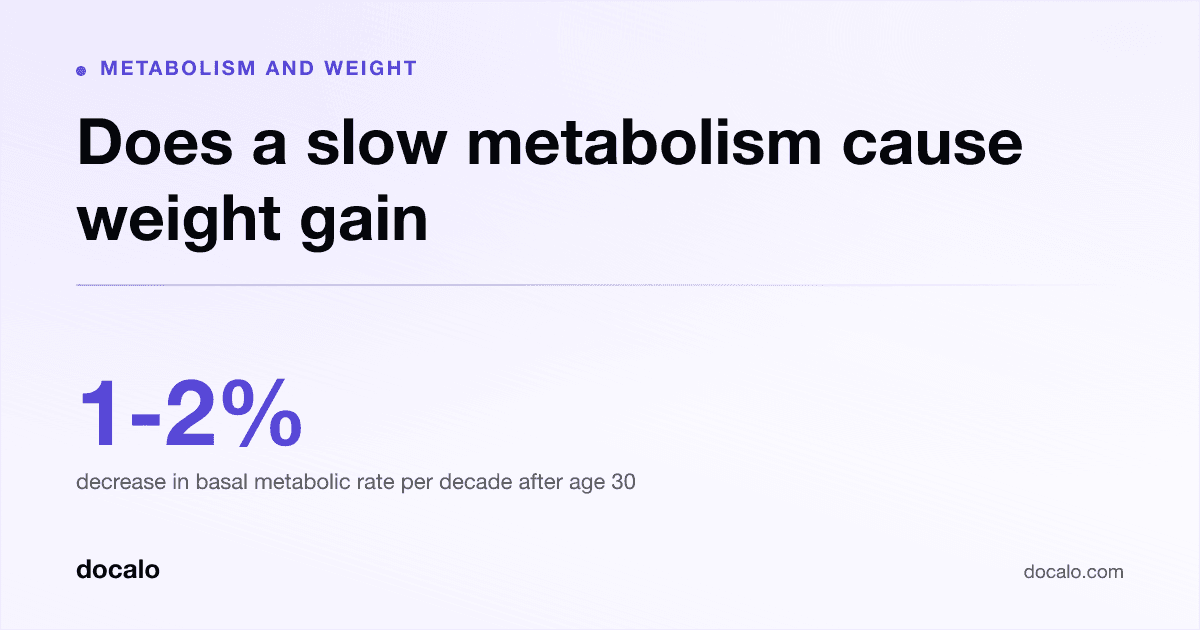
One of the most well-documented aspects of metabolism is its tendency to slow down with age. After about age 30, your basal metabolic rate typically decreases by 1-2% per decade. This slowdown is not just an inevitable part of aging; it's largely influenced by changes in body composition. As we age, we tend to lose muscle mass (a process called sarcopenia) and gain fat mass. Muscle tissue is more metabolically active than fat tissue, meaning it burns more calories at rest. Therefore, a decrease in muscle mass directly translates to a lower BMR.
This highlights the importance of maintaining muscle mass through strength training as you get older. Regular resistance exercise can help counteract age-related muscle loss, thereby helping to preserve a higher metabolic rate.
Debunking Metabolism Myths: What's Not True
There are many misconceptions about metabolism that can lead to frustration and ineffective weight management strategies. Let's address some common myths:
- Myth: Eating small, frequent meals 'boosts' metabolism. While eating regularly can help manage hunger and blood sugar levels, there's no strong evidence that it significantly increases your overall metabolic rate compared to eating the same number of calories in fewer, larger meals. The total calories consumed over a day are more important than the meal frequency.
- Myth: Certain foods dramatically 'speed up' metabolism. While some foods, like chili peppers or green tea, may have a very modest and temporary effect on metabolism due to their thermogenic properties, their impact on overall calorie burn and weight loss is negligible. Relying on these foods as a primary weight loss strategy is unlikely to be effective.
- Myth: Skipping meals 'shuts down' metabolism. Your body is remarkably adaptable. While prolonged starvation can lead to a metabolic slowdown as your body tries to conserve energy, skipping an occasional meal or practicing intermittent fasting does not 'shut down' your metabolism. In fact, some research suggests that intermittent fasting can have various health benefits, provided it's done safely and appropriately.
- Myth: Being overweight automatically means you have a slow metabolism. In many cases, individuals with higher body weight actually have a higher basal metabolic rate because they have more tissue (both fat and muscle) to maintain. The challenge often lies in the balance between calorie intake and expenditure, rather than an inherently slow metabolism.
The Real Drivers: Diet and Exercise
While you can't drastically alter your genetic metabolic blueprint, you have significant control over the two most powerful levers for influencing your metabolic rate and managing your weight: diet and exercise.
Nutrition Strategies
- Prioritize protein: Protein has a higher thermic effect than carbohydrates or fats, meaning your body burns more calories digesting it. It also helps preserve muscle mass, which is crucial for maintaining a healthy BMR.
- Eat whole, unprocessed foods: These foods are generally more nutrient-dense and satisfying, helping to regulate appetite and prevent overeating.
- Stay hydrated: Water is essential for all metabolic processes. Dehydration can impair your body's ability to burn calories efficiently.
- Avoid restrictive diets: Severely restricting calories can lead to a metabolic slowdown as your body enters 'survival mode'. Sustainable weight management focuses on a balanced, calorie-appropriate intake.
Exercise Strategies
- Incorporate strength training: Building and maintaining muscle mass is perhaps the most effective way to positively influence your BMR. Aim for at least two strength training sessions per week.
- Engage in regular cardiovascular activity: Activities like brisk walking, jogging, cycling, or swimming burn calories during the activity and contribute to overall energy expenditure.
- Increase NEAT: Look for opportunities to move more throughout your day – take the stairs, walk during phone calls, stand up frequently. These small movements add up.
How Docalo can help
Navigating the complexities of weight management can be challenging. Docalo offers a comprehensive approach to support you on your journey. Our EUR49/month membership includes access to a licensed doctor who can review your health profile and discuss whether a medical weight management program is appropriate for you. If the doctor determines that treatment is not suitable, you will receive a full refund. The membership also includes ongoing care-team messaging, progress tracking, refill support, and pharmacy coordination. Please note that any medication, if prescribed, is paid separately at the pharmacy.
A licensed doctor reviews every consultation and decides if treatment is appropriate for your individual situation — nothing is ever prescribed automatically.
Docalo membership is EUR49/month with ongoing medical review. If the doctor decides treatment is not appropriate, you receive a full refund.
Consult DocaloCOMMON QUESTIONS
Frequently asked questions
While you can't fundamentally change your genetic metabolic rate, you can optimize it through lifestyle choices. Building muscle mass through strength training, eating a balanced diet, and engaging in regular physical activity can help maintain a healthy metabolic rate and counteract age-related slowdowns.