Diet9 minute read
Eating well on GLP-1 treatment: a guide for when your appetite is low
When a GLP-1-based medicine quietens your appetite, eating enough of the right things matters more. A practical guide to protein, small meals, fibre, fluids and alcohol.
DIRECT ANSWER
An online consultation lets an EU-licensed doctor review your case and, if appropriate, issue a prescription that is valid across the EU.
Doctor reply in under 2 hours
Average doctor reply under 2 hours; prescription within 24 hours if approved.
EU-licensed doctors
Every case is reviewed by a licensed clinician.
Valid across the EU
Approved prescriptions can be used at any EU pharmacy.
Key takeaways - When appetite is low, eat protein first at each meal so it is not the part you leave behind. - Small, regular meals are usually easier on the stomach than three large ones. - Fibre and fluids help prevent constipation, a common issue on GLP-1-based treatment. - Fatty, fried and very rich foods often make nausea worse, especially after a dose increase. - Alcohol adds calories with no nourishment and may worsen stomach symptoms, so less is better.
Docalo pairs you with a licensed doctor who reviews your health and builds a weight plan with you.
If you are taking a GLP-1-based medicine, you may find that a plate of food you used to finish now feels like far too much. Some days you might forget to eat at all. That quieter appetite is how the medicine works, but it raises a new question: how do you make sure the smaller amount you eat still gives your body what it needs?
This guide covers the practical side of eating on treatment: what to put first on your plate, how to space meals, which foods tend to cause trouble and how to look after your gut. If your main concern is nausea or other side effects, our guide to nausea and digestive side effects goes deeper into those.
Why eating well matters more when you eat less
When you eat less, every meal carries more weight. A smaller intake makes it easier to fall short on protein, fibre, vitamins and minerals, and harder to stay hydrated.
Protein matters most. Part of the weight lost on any treatment is lean tissue, which includes muscle. A review of lean mass changes on GLP-1-based treatment found that lean tissue made up a variable share of the weight lost in trials, from about 15% or less in some studies to 40 to 60% in others, with more concern for older people. Lean mass also includes organs and water, so it is not all muscle. Eating enough protein, alongside strength exercise, is the simplest way to protect it. Our guide on how GLP-1 weight-loss medication works explains why the medicine reduces how much you eat rather than burning fat directly.
The NICE guideline on overweight and obesity also advises that medication is used alongside dietary support, not instead of it.
Protein first
A simple habit helps: start each meal with the protein part. If you get full halfway through, you have still eaten what matters most.
How much protein?
Research on protein during weight loss suggests around 1.2 to 1.6 g per kilo of body weight a day helps with fullness and protects lean mass. For a person weighing 90 kg, that is roughly 110 to 145 g a day, spread across meals. If you have kidney disease, check with your doctor before raising protein.
Easy protein when you are not hungry
- Greek-style or natural yoghurt, kefir or skyr
- Eggs, scrambled or boiled
- Fish such as salmon, sardines or tinned tuna
- Chicken, turkey or lean meat in small portions
- Tofu, tempeh, lentils, chickpeas and beans
- Cottage cheese or a glass of milk
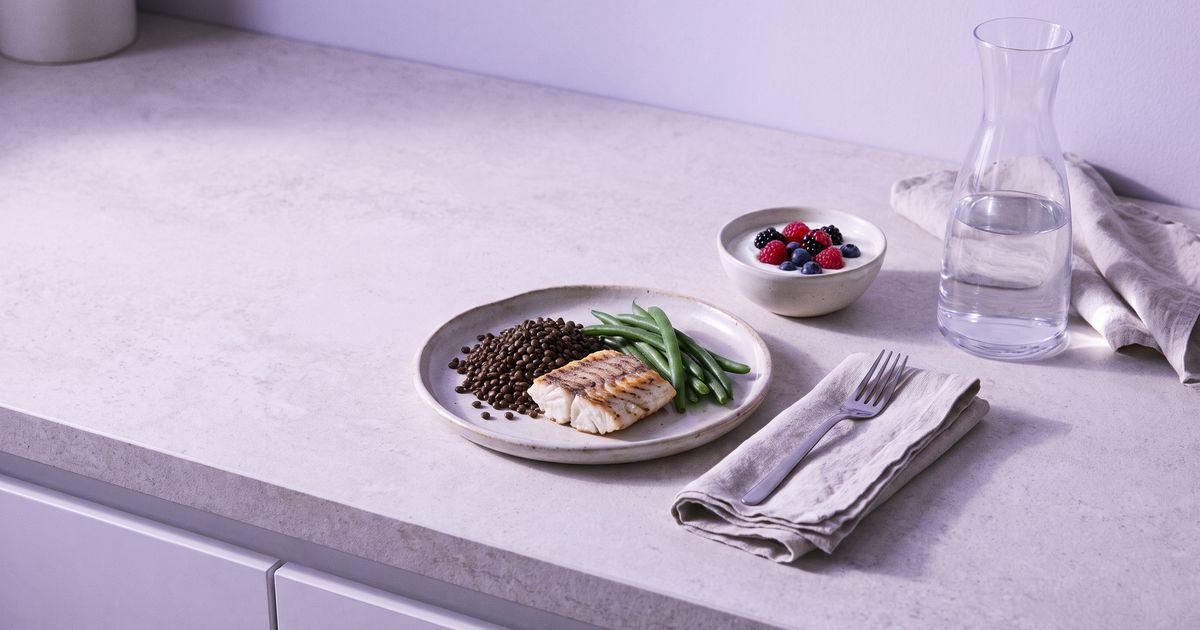
Soft, cool foods such as yoghurt are often easier to manage than a large hot meal. Smoothies made with milk or yoghurt can help on days when chewing feels like effort.
Small, regular meals
Many GLP-1-based medicines slow how quickly food leaves your stomach. A large meal can sit there and cause discomfort, reflux or nausea. A clinical review on side-effect management recommends eating smaller meals, eating slowly and stopping as soon as you feel full.
| Instead of | Try |
|---|---|
| Three large meals | Four or five small meals or snacks |
| Eating quickly | Putting your fork down between bites |
| Finishing the plate | Stopping at the first sign of fullness |
| Skipping meals and then eating a lot | Eating at roughly regular times, even if small |
| Lying down after eating | Staying upright for 2 to 3 hours after a meal |
A side plate instead of a dinner plate makes portions look less daunting. If you often forget to eat, a reminder on your phone at set times can help.
Fibre, fruit and vegetables
Constipation is common on GLP-1-based treatment, partly because you eat and drink less. Fibre helps keep things moving and feeds the gut bacteria that support digestion.
European dietary advice generally suggests at least 25 g of fibre a day for adults, and most people eat less than this. Higher fibre intakes are also linked with lower rates of heart disease, type 2 diabetes and bowel cancer.
Good sources:
- Oats, wholegrain bread and brown rice
- Lentils, beans and chickpeas (which also add protein)
- Vegetables, cooked or raw
- Fruit, especially berries, pears and kiwi
- Seeds such as chia or ground linseed
Add fibre gradually. A sudden large increase can cause wind and bloating, especially when your stomach is already slower.
Fluids and hydration
Eating less means you get less water from food, and you may feel less thirsty too. If you have nausea, vomiting or diarrhoea, you lose more fluid. Dehydration can make constipation, tiredness and headaches worse.
Practical ways to keep fluids up:
- Keep a bottle of water within reach and sip through the day.
- Try herbal teas, sparkling water or water with a slice of lemon or cucumber.
- Drink between meals rather than a lot with meals, which can make you feel too full.
- Watch for dark urine, which is a sign you need more fluid.
If you cannot keep fluids down for more than a day, contact a doctor.
Foods that can make nausea worse
Some foods are harder to digest when your stomach is emptying slowly. They tend to cause more trouble in the first weeks and after each dose increase.
| Often harder to tolerate | Often easier |
|---|---|
| Fried food, chips, pastries | Grilled, baked or steamed dishes |
| Creamy sauces and fatty meat | Tomato-based sauces, lean meat or fish |
| Very spicy food | Mildly seasoned food with herbs |
| Large fizzy drinks | Still water sipped slowly |
| Very sweet desserts | Fruit with yoghurt |
This varies from person to person. Keeping a short food diary for a couple of weeks can show you your own triggers.
Alcohol: go carefully
Alcohol adds calories with almost no nourishment, and when you are eating less, those calories take the place of food your body needs. It can also irritate the stomach, worsen reflux and nausea and add to dehydration.
The WHO Regional Office for Europe states that no level of alcohol use is safe for health. If you drink, keep amounts small, have it with food and alternate with water. Some people find their interest in alcohol drops on treatment. Our guide to alcohol and weight loss covers this in more detail.
Are you eating too little?
Low appetite can tip into eating far less than your body needs. Signs to watch for include dizziness, constant tiredness, feeling cold, hair shedding or losing weight very quickly. You can get a rough idea of your daily energy needs with the TDEE calculator, keeping in mind that it gives an estimate, not a target.
If you are regularly eating much less than you need, tell your doctor. They may review your dose or your plan. Our guide to protecting muscle during weight loss explains why steady, not extreme, weight loss is safer.
How Docalo can help
Docalo is an online medical service focused only on weight loss. Your €49/month membership covers a doctor consultation, a personal plan with practical eating guidance and follow-up with the medical team as your needs change.
A licensed doctor reviews your health questionnaire and decides whether treatment is appropriate for you. If they prescribe medication, it is paid separately at the pharmacy. If you are on treatment and finding it hard to eat well, or you are considering your options, you can start your consultation.
One Docalo membership covers the doctor assessment, a personal plan, monthly follow-up and messaging. Medication, if prescribed, is paid separately at the pharmacy.
COMMON QUESTIONS
Frequently asked questions
Start with the protein part of your meal, such as eggs, fish, chicken, tofu, lentils or yoghurt. Protein helps protect muscle and keeps you full for longer. If you still have room afterwards, move on to vegetables and then starchy foods. This order means that even a small meal covers what matters most.
References
- Wharton S et al. Managing the gastrointestinal side effects of GLP-1 receptor agonists in obesity. Postgrad Med 2022;134:14-19.
- Leidy HJ et al. The role of protein in weight loss and maintenance. Am J Clin Nutr 2015;101:1320S-1329S.
- Neeland IJ et al. Changes in lean body mass with GLP-1-based therapies and mitigation strategies. Diabetes Obes Metab 2024.
- WHO Regional Office for Europe. No level of alcohol consumption is safe for our health. 2023.
- NICE guideline NG246: Overweight and obesity management. 2025.